The Wage Protection System (WPS) is the backbone of salary compliance in the UAE. Every mainland employer registered with MOHRE must pay staff through it — and the rules keep getting sharper. This guide walks through what actually matters in 2026.
What WPS actually requires
At its core, WPS asks for one thing: proof that every employee received their full agreed wage, on time, through an approved channel. That proof is the SIF file — a fixed-format record of every salary payment, submitted through your bank or exchange house.
- Salaries must be paid within 15 days of the due date
- The SIF file must match the contract wage registered with MOHRE
- At least 90% of your workforce must be paid through WPS each cycle
- Repeated late payment blocks new work permits for the company
Where companies get caught
The most common failure is not fraud — it is drift. An allowance changes in a side letter but never reaches MOHRE. A joiner is paid in cash "just for the first month". A resignation is processed but the SIF still carries the leaver. Each one is a mismatch, and mismatches accumulate into blocks.
The fix is structural: payroll, contracts, and employee records must live in one system so the SIF is generated from the same data MOHRE already has.
How HRHub handles it
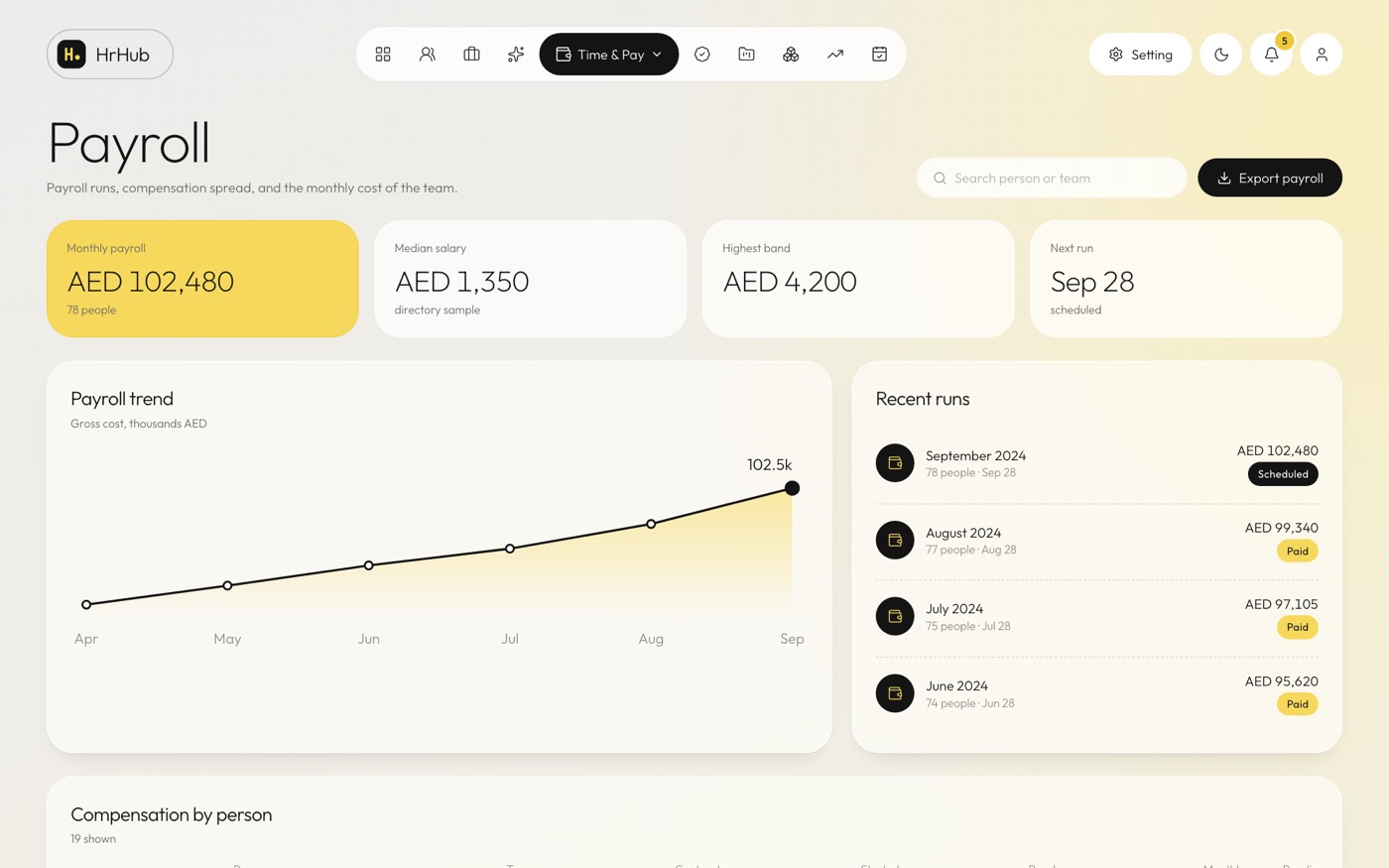
HRHub generates the SIF file directly from the payroll run — salaries, adjustments, leavers, and joiners included — and validates every line against the employee record before you download it. Gratuity accruals and end-of-service calculations follow UAE Labour Law automatically.
Payroll that is compliant by construction, not by heroics at month-end.